RE 104–108  ·  INCOMPRESSIBLE TO HYPERSONIC  ·  OPENFOAM / SU2

We simulate
how fluids actually
move.

Tensor Byte Labs Engineering Services runs high-fidelity CFD for aerospace and water/marine programmes — from external aerodynamics and aeroacoustics to hull resistance and offshore hydrodynamics. Led by a computational-aeroacoustics PhD who publishes the schemes we run in production.

3 peer-reviewed CFD schemes
in active production use
69 citations on published
numerical methods research
PhD Aerospace Engineering,
Queen Mary University of London
GPU accelerated in-house solvers,
multi-core & multi-GPU

// SERVICES

Two industries. One flow physics discipline.

DOMAIN: AIR

Aerospace CFD

External aerodynamics, propulsion integration, and the aeroacoustics that certification and cabin-comfort teams actually get graded on.

  • Full-aircraft & component external aero, transonic to hypersonic
  • Airframe & jet noise prediction — tonal and broadband
  • Turbomachinery and inlet/exhaust flow
  • Store separation, unsteady RANS, DES/LES
  • High-order shock-capturing for discontinuous flows
DOMAIN: WATER

Water & Marine CFD

Free-surface, hull, and process-water flows — where resistance, wake, and fatigue loading decide the business case.

  • Hull resistance, trim & sinkage, wave-making (VOF)
  • Offshore riser and structure hydrodynamics, VIV
  • Propeller & appendage flow, cavitation onset
  • Water treatment, tank mixing, and HVAC flow design
  • Coupled fluid–structure interaction on demand

// SOLVER STACK

Open, auditable, and — where it matters — our own.

No black boxes. Every result ships with the mesh, the solver settings, and a residual history you can check yourself.

OpenFOAM

Primary solver for incompressible and multiphase work: simpleFoam, interFoam, overInterDyMFoam for free-surface and moving-body problems.

SU2

Compressible and transonic aerodynamics with adjoint-based shape sensitivity, used for external aero and design-space exploration.

CABARET & in-house schemes

High-order, low-dissipation finite-volume schemes developed and published by our lead consultant — deployed when off-the-shelf dissipation would mask the physics.

GPU / multi-core

Solver acceleration for large unsteady cases where wall-clock time is the actual constraint, not mesh count.

// REPRESENTATIVE ENGAGEMENTS

Case studies, with the solver settings left in.

A sample of the class of problems we run. Cell counts and configurations are representative of production runs on comparable geometries.

AEROSPACE · SU2 · RANS (SST)

Trailing-edge noise on a high-lift wing section

Unsteady RANS on a 12M-cell hybrid mesh to resolve trailing-edge vortex shedding, coupled to a Ffowcs Williams–Hawkings acoustic analogy for far-field tonal noise prediction.

Re 2.1×10⁶Mesh 12M cellsy⁺ < 1
MARINE · OPENFOAM · interFoam

Hull resistance & wake for a displacement vessel

Free-surface VOF simulation across a Froude number sweep, dynamic trim and sinkage solved via 6-DOF coupling, validated against towing-tank resistance curves.

Fr 0.15–0.35Mesh 8M cells6-DOF coupled
OFFSHORE · OPENFOAM · pimpleFoam

Vortex-induced vibration on a subsea riser

Unsteady 2D-strip and 3D URANS runs across the lock-in range to characterise cross-flow amplitude and fatigue loading ahead of a structural review.

Re 4×10⁴–2×10⁵Lock-in mappedFatigue-ready output
WATER TREATMENT · OPENFOAM · porousZones

Flow distribution through a perforated diffuser plate

Steady-state simulation of a clarifier inlet fitted with a perforated distribution plate, tuning hole pattern and open-area ratio to eliminate short-circuiting and dead zones ahead of settling.

38% open areaMesh 6M cellsUniformity +41%
TURBOMACHINERY · SU2 · RANS (SA)

Secondary-flow loss in a gas-turbine blade passage

Single-passage RANS with mixing-plane rotor–stator interfaces to map horseshoe-vortex and passage-vortex loss generation and inform endwall contouring.

Re 8×10⁵Mixing-plane coupledLoss coeff. mapped
TURBOMACHINERY · OPENFOAM · MRF / rotatingWallVelocity

Stall margin on an axial compressor stage

Multiple-reference-frame and sliding-mesh runs across the operating line to locate rotating-stall onset and quantify surge margin before a rig test was scheduled.

MRF + sliding meshOperating-line sweepStall margin quantified
AEROSPACE · SU2 · SHOCK / BOUNDARY-LAYER

Shock–boundary-layer interaction in a supersonic inlet

Density-based compressible RANS resolving the oblique shock train and separation bubble in a supersonic intake, with mesh convergence checked against a CABARET benchmark run.

Mach 1.8–2.4Density-based solverShock train resolved
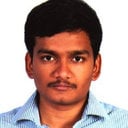
Dr. Abhishek Chintagunta

// LEAD CONSULTANT

Dr. Abhishek Chintagunta

Head Researcher — Computational Fluid Dynamics & Aeroacoustics

PhD in Aerospace Engineering from Queen Mary University of London, where his research on flux-corrected, dispersion-improved CABARET schemes for wave propagation and computational aeroacoustics is published and cited across the field. His numerical methods work underpins the high-order solvers TBL deploys when standard schemes aren't accurate enough.

  • PhD Aerospace Engineering — Queen Mary University of London (2019)
  • MPhil Mechanical Engineering — University of Surrey (2014)
  • MTech Aerospace Engineering — IIT Kharagpur (2008)
  • Award Dorothy Hodgkin Postgraduate Studentship, Rolls-Royce plc.

SELECTED PUBLICATIONS

  • Flux-corrected dispersion-improved CABARET schemes for linear and nonlinear wave propagation problems — 48 citations
  • CABARET on rotating meshes — 14 citations
  • A fourth-order CABARET scheme for Computational Aeroacoustics — 3 citations
  • Implicit-gradient conservative scheme for compressible flows — 2021
Read the full research breakdown → View full publication record on Google Scholar →

// GET IN TOUCH

Send us the geometry. We'll send back the physics.

Tell us the problem, the industry, and the deadline — we'll scope the mesh and turnaround from there.